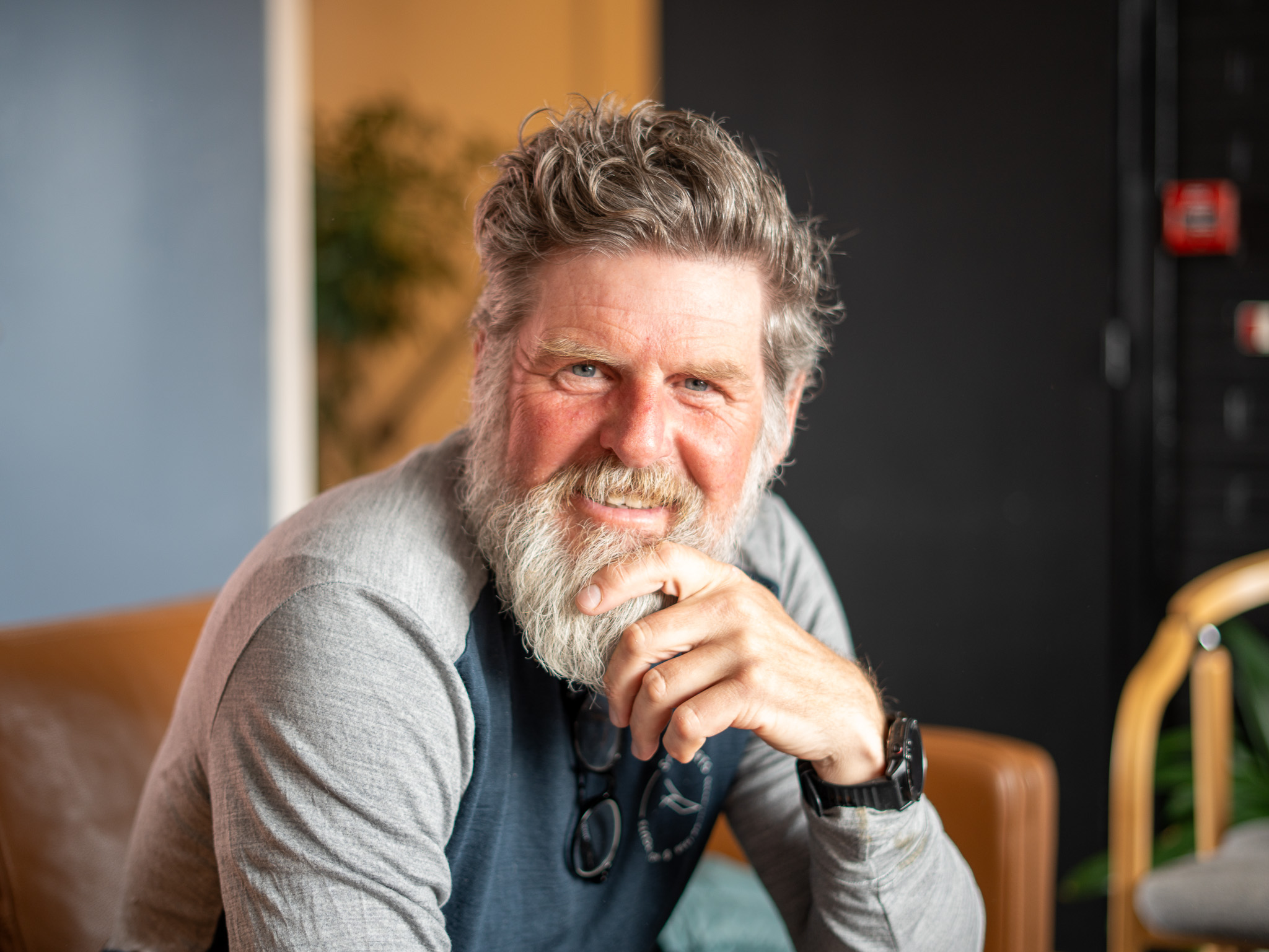
English chef and adventurer Mike Keen spent 30 days in Kullorsuaq, where he subsisted solely on fermented seal meat. The experiment was intended to explore traditional Arctic diets, but it also evolved into a personal reckoning with modern eating habits—and a love affair with Greenland
The bathroom looked like a crime scene. Blood on the floor. A heavy smell of raw meat. And right in the middle of it all: a whole seal, slowly beginning to ferment.
For 30 days, English chef and adventurer Mike Keen ate nothing else.
No bread. No vegetables. No coffee. No sugar. Only seal.
“It was just seal. Eyes, testicles, liver, intestines, heart, lungs. It all went into the bucket, covered in fat, and was left to ferment,” he says with a laugh that suggests he’s well aware of how absurd the project sounds.
The experiment actually began as something else. Keen had planned a skiing trip to North Greenland, where he intended to investigate whether fermented seal meat—mikiak—could sustain a person for a month, just as the Inuit have subsisted on marine animals for thousands of years.
But the climate and the ice had other plans.
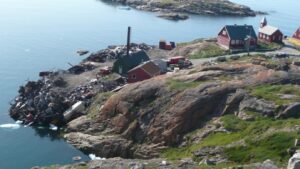
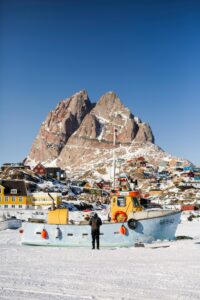
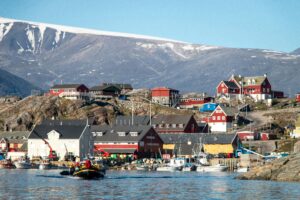
Delays and unsafe ice conditions meant that the planned trip had to be abandoned. Instead, Mike Keen settled in the North Greenlandic village of Kullorsuaq, where the experiment evolved into something far more stationary—and perhaps even more extreme.
In a friend’s bathroom in Kullorsuaq, he set up an entire seal, which he allowed to ferment slowly while he ate nothing else for 30 days.
“I ended up staying in Kullorsuaq. I had this seal standing in a friend’s bathroom. It looked like a crime scene with blood everywhere,” he says.
On social media, he was met with warnings. People wrote that he would get botulism. That he risked dying.
And maybe they were right.
Keen was several days’ journey from the nearest medical care. The temperature in the room was around 17 degrees, and the seal became more and more foul-smelling with each passing day. But he relied on his experience from previous stays in North Greenland, where he had tasted fermented meat alongside local hunters.
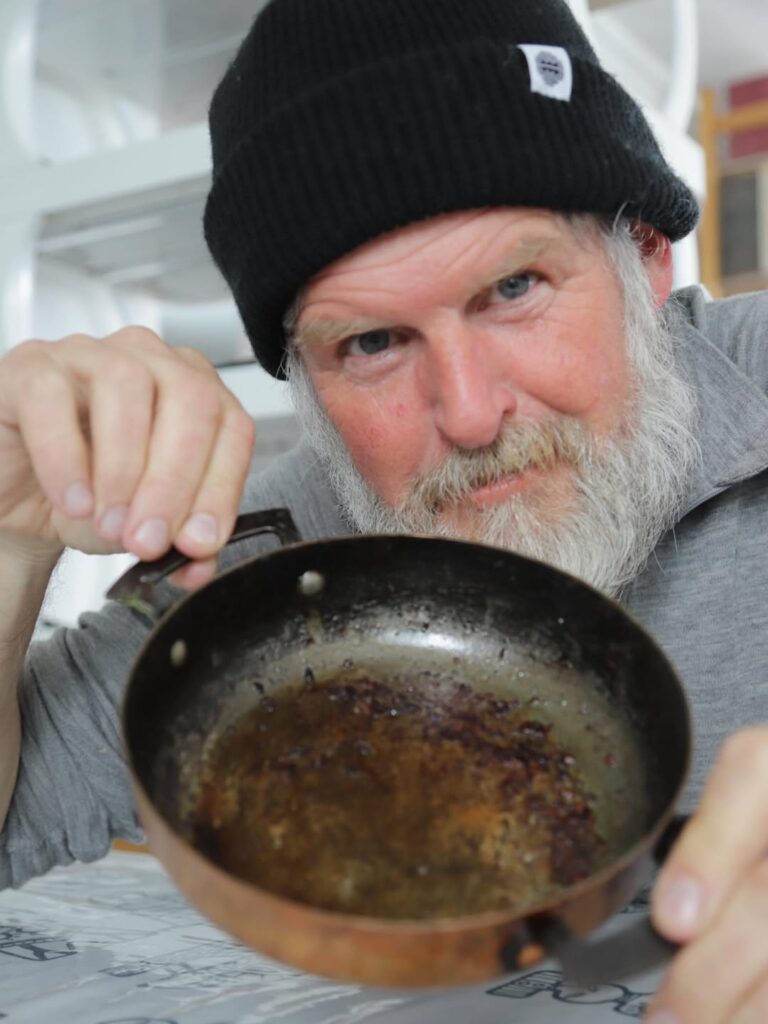
One animal. One month.
By the end of the 30 days, Mike Keen had lost ten kilos. But the surprising thing wasn’t the weight loss.
“My energy levels were amazing. I slept really well. My hair, beard, and nails grew like crazy,” he says.
The most striking thing, he says himself, was the amount of food.
On average, he ate only about 220 grams of seal meat a day—roughly the size of a large burger patty.
And he wasn’t hungry.
Along the way, he took samples of the meat—a total of 51 samples from day one through the end of the fermentation process—as well as biological samples of himself to investigate how the diet affected his body and gut flora. The samples are being analyzed by researchers in both Greenland and the United Kingdom.
Mike Keen hopes the project can teach the world something about health.
He believes that fermented seal meat may offer nutritional benefits that modern societies overlook, and he points to Greenlandic traditions as a source of knowledge that deserves more attention.
He believes that modern dietary habits, ultra-processed foods, and industrialized food production are key factors behind the rise in lifestyle-related diseases. At the same time, he criticizes the notion that a plant-based diet is necessarily the answer—especially in an Arctic society like Greenland, where people have historically lived off marine mammals, fish, and game.
These are claims that continue to be debated among researchers, and which Keen himself hopes to clarify using data from his experiments.
But one thing is clear to him:
Greenland changed his perspective on food.
“It dawned on me just how unique Greenland is. The animals live in the wild in some of the world’s cleanest waters. They aren’t pumped full of hormones or antibiotics. You hardly find that anywhere else anymore,” he says.
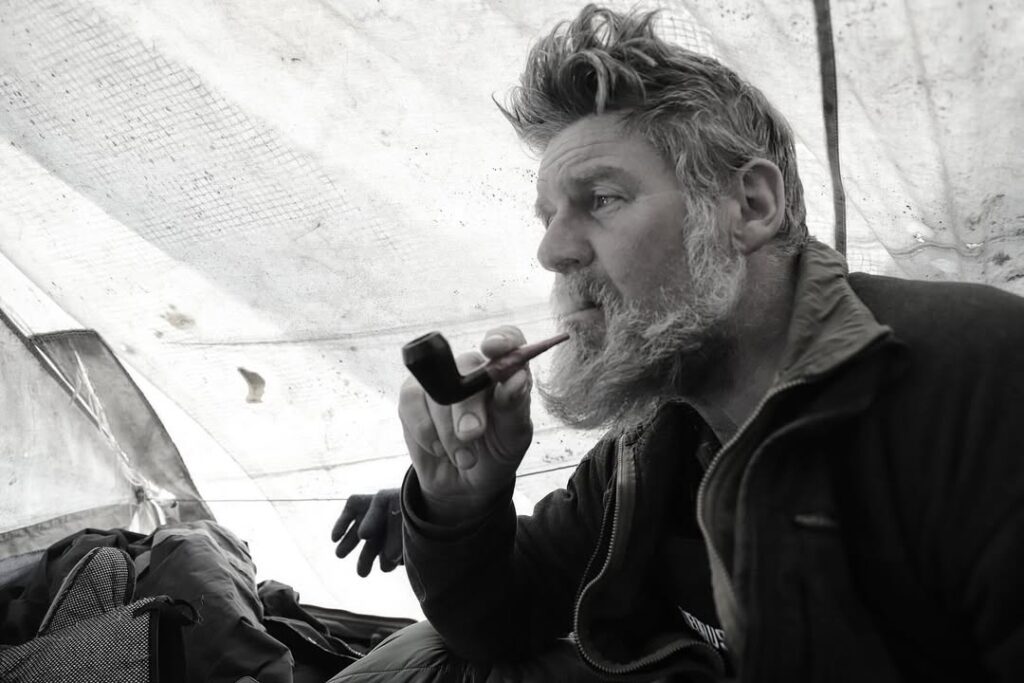
From Qaqortoq to Qaanaaq
However, it all began long before the seal appeared in the bathroom in Kullorsuaq.
Actually, it all started over a beer.
Mike Keen was working at Camp Kiattua near Nuuk when a conversation with a guide took an unexpected turn.
They talked about Greenland. About the vast distances. About kayaking as a cultural heritage.
What if you sailed all the way from Qaqortoq in the south to Qaanaaq in the north?
Keen looked up the distance online.
About 3,500 kilometers.
“I’d only been kayaking for two years, but I thought: 30 kilometers a day for about 100 days? I’m sure I can do that,” he says.
He realizes now that the decision may have been naive.
“If I’d known how hard it would be, I probably never would have done it.”
On April 26, 2023, he set sail from Qaqortoq.
He had sponsored gear, a GPS map on his website, and interviews with KNR, which led people along the coast to start following his journey.
That proved to be the deciding factor.
For while Keen had imagined a solitary adventure, the trip turned out instead to be a story of Greenlandic hospitality.
“Every time I arrived in a village or town, there was almost always someone waiting with a bag of food and a place to sleep. People knew where I was before I did,” he says.
In these smaller communities, he experienced a daily life where hunting, nature, and relationships still set the pace.
“It frustrated me at first. Why isn’t anything happening? Why don’t we start until the evening? But then it dawned on me: Why are we always in such a rush?” he says.
He describes a Greenland where children play late into the night, where coffee parties can last all day, and where people—despite economic challenges—still prioritize community.
It changed his view of success.
He used to dream of restaurants, Michelin stars, and money.
He is now giving a lecture on diet, evolution, and Greenland.
His kayaking trip was turned into a documentary narrated by actor and director Nikolaj Coster-Waldau, and the project has since garnered attention from international media.
Greenland as a Laboratory
Mike Keen often refers to Greenland as his “testing ground.”
“Not because the country is an experiment,” he emphasizes, “but because encountering the hunting culture and local foods made him question everything he had previously taken for granted as a chef.”
He has visited Greenland more than a dozen times.
And the plans don’t stop there.
The next step will be new dietary experiments, in which he will compare different diets over a longer period of time.
But no matter where his projects take him, he always returns to the place where it all began.
“Greenland is 100 percent the reason I’m doing these experiments. The people, the nature, and the way of life completely changed me—and definitely for the better.”
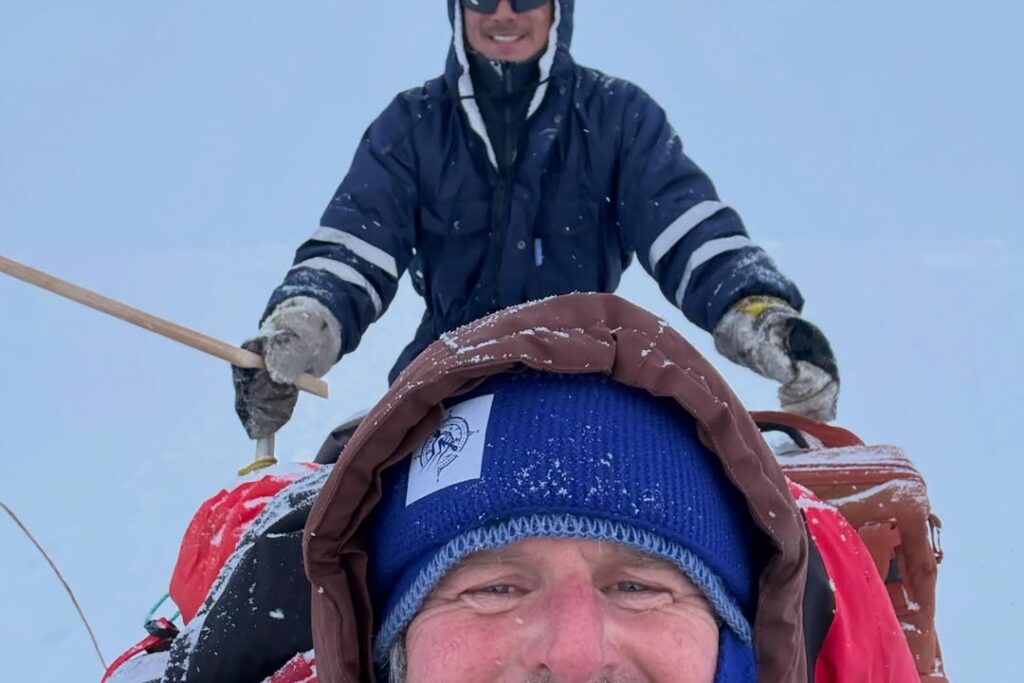
Greenland changed him
When Mike Keen talks about Greenland, it sounds less like a destination and more like a place that has left a lasting impression on him.
He first came as a chef and adventurer, fascinated by fermentation and traditional foods. But through his kayaking trips, his encounters with the villages, and the many months he spent among hunters and families, that fascination grew into something greater.
He’s talking about hospitality.
About coffee breaks that never seemed to end. About people who offered him food and a place to sleep long before they even knew him. About children playing late into the night, and a life that—despite harsh conditions—still largely follows the rhythm of nature rather than that of the clock.
“Greenland completely changed my outlook on life. In England, everything revolves around deadlines, work, and money. Here, I learned that it’s okay to sit down, have a cup of coffee, spend time with people, and just let things take the time they need,” he says.
He makes no secret of the fact that it is the contrasts that have made an impression on him as well.
Modern Western society, he says, often feels trapped in a cycle of busyness, consumerism, and the pursuit of more. In Greenland, he experienced something different—a place where relationships still matter more than efficiency, and where nature still sets the tone.
“I think I’ve been to Greenland 14 or 15 times now. And I keep coming back. The people, the nature, and the way of life have changed me—definitely for the better.”