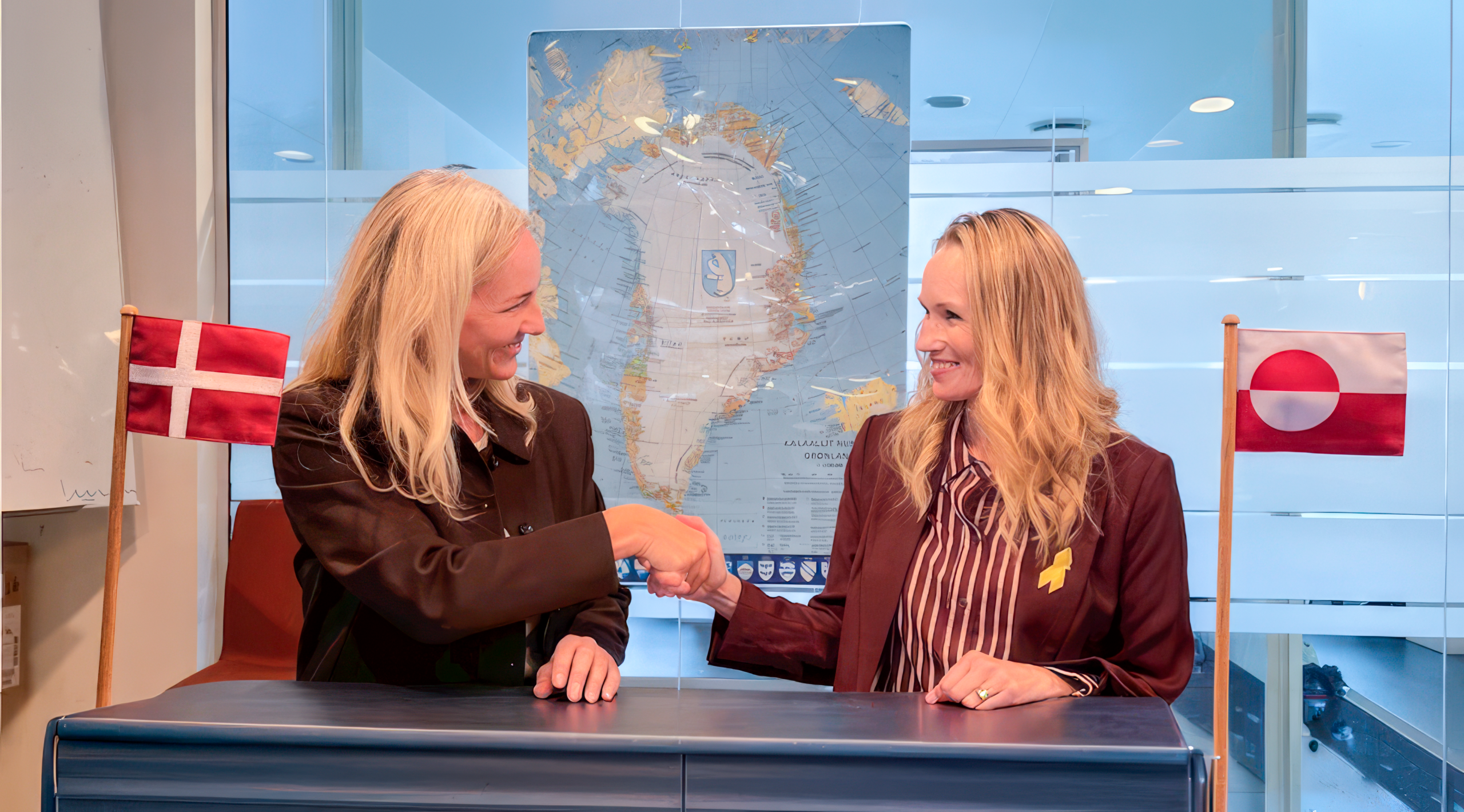
Greenland’s Naalakkersuisoq for Health and Persons with Disabilities, Anna Wangenheim, and Health Minister Ida Auken have reached an agreement that means Greenlandic patients will in the future be able to receive specialized treatment at Danish hospitals without payment from the Greenlandic health care system. The agreement makes the arrangement for treating Greenlandic patients in Denmark permanent, establishes a new medical advisory board, and streamlines the administrative procedures involved in a patient’s treatment in Denmark. Sent
Under a new agreement between Greenland and Denmark, Greenlandic patients will have access to specialized hospital treatment in Denmark on the same terms as Danish patients. A new medical advisory board will be established to advise on which types of treatment should be provided in Greenland and which should be provided in Denmark. The council will be based in Greenland and will thus help establish a clearer division of labor between Greenland’s healthcare system and Danish hospitals.
Health Minister Ida Auken: “Many
Greenlandic patients need specialized treatment that cannot be provided in Greenland today, as there are not enough patients to sustain the necessary specialization. I have seen this myself over the past few days, during which I have visited various parts of the Greenlandic healthcare system together with my Greenlandic colleague Anna Wangenheim.
We need a more integrated healthcare system that better links the Greenlandic and Danish healthcare systems. That is why I am pleased that, with this agreement, we are ensuring that Greenlandic patients receive the same access to specialized treatment as Danes when the treatment takes place in Denmark.
The agreement marks an important milestone in the long-standing and strong healthcare partnership between Greenland and Denmark. I view it as a historic agreement at a crucial moment.
We are helping patients here and now, but we must also strengthen the Greenlandic healthcare system in the long term. That is why it is important that this agreement provides a solid foundation for the further development of Greenland’s own healthcare system.”
Naalakkersuisoq for Health and Persons with Disabilities Anna Wangenheim says: “The purpose
of the agreement is to ensure the best possible care for Greenlandic patients when they need specialized treatment. When you are sick and have to travel a long distance, it is crucial that you receive the best possible treatment without unnecessary delay. In this regard, it has been important to me that there be no difference between the specialized treatment available to our citizens and that offered to Danish citizens.
At the same time, I have focused on ensuring that no unnecessary waiting times arise due to administrative or financial issues, as time is critical to the outcome of treatment. The new agreement reduces the administrative procedures and barriers that have previously been associated with referrals and treatment in Denmark.
For me, the agreement also reflects our commitment to continuing to develop our own healthcare system using the funds that were previously spent on treatment in Denmark. In this way, we can ensure the best possible quality and capacity here in the country.”
Under the agreement, the Greenlandic healthcare system will no longer be charged for specialized hospital treatment of Greenlandic patients in Denmark. The agreement thus frees up approximately 180 million DKK annually, which will make it possible to strengthen and develop the healthcare system in Greenland.
The Greenlandic healthcare system must continue to treat as many patients as possible in Greenland, so that, as a general rule, patients do not have to travel to Denmark to receive treatment. At the same time, the healthcare system in Greenland must continue to be developed and made more robust. However, patients who require specialized treatment that cannot be provided in Greenland must be offered the opportunity to receive treatment in Denmark on an equal footing with Danes.
In parallel with the new model for treating Greenlandic patients in Denmark, efforts to strengthen the healthcare system in Greenland will continue. This will be achieved, among other things, through the “relay” program, in which a Danish hospital department provides staff who take turns filling a full-time position in Greenland through a series of extended stays.
Facts About the Agreement
- The agreement frees up approximately 180 million Danish kroner annually, which will make it possible to improve health care and the development of the Greenlandic health care system.
- In the future, Greenlandic patients will be able to receive specialized treatment at Danish hospitals without the Greenlandic Health Service covering the costs.
- A medical advisory board is to provide guidance on which types of treatment should be provided in Greenland and which should be provided in Denmark.
- The agreement will take effect on January 1, 2027.
- The agreement is a follow-up to the Framework Agreement on a Self-Sustaining Greenland of September 16, 2025, and the Sub-Agreement on the Implementation of the Framework Agreement of February 9, 2026.
- In 2026, Greenland’s expenses for specialized treatment in Denmark will also be covered by a fund that reimburses the Greenlandic Health Service for these expenses.
- The agreement was signed on September 3, 2026, during Health Minister Ida Auken's visit to Nuuk.