The EU is providing approximately 20 million kroner in funding for a new project aimed at strengthening Greenland’s data infrastructure in the areas of commercial hydropower and wind energy.
The project will be carried out by Asiaq – Greenland Survey and includes hydrological studies, new wind energy surveys, and the development of a public data portal that will make this data freely available to everyone.
The funding is part of the current Green Growth Agreement between Naalakkersuisut and the European Commission, which was signed in 2024. The funding is intended to help strengthen the foundation for attracting future commercial investments in renewable energy from abroad. At the same time, the data will also support research, climate adaptation, and long-term energy planning in Greenland.
The project will run for five years and is intended to help create a stronger foundation for investments in renewable energy, as well as support research and climate adaptation.
Naalakkersuisoq for the Environment, Nature, Energy, and Research, Jørgen Rosbach, welcomes the support from the EU: “We have great potential in the field of renewable energy, and if we want to attract investment and drive new development, we need solid and accessible data. With this support from the EU, we are strengthening our knowledge of both hydropower and wind power, and we are taking an important step toward making more key data publicly available. This creates a stronger foundation for future investments, research, and our green transition.”
The funds will be used, among other things, for hydrological studies at three hydropower sites where measurements are necessary to support the attraction of future commercial investments.
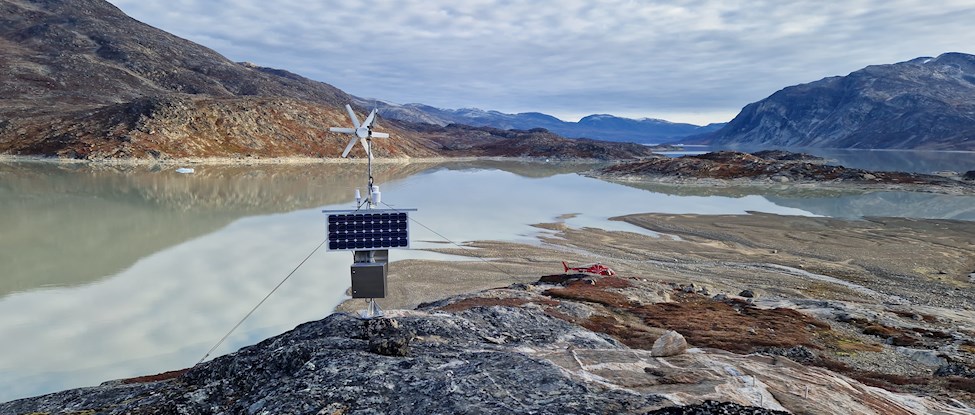
The funds will also be used for new studies of wind conditions for large-scale energy production. Asiaq has many years of experience with hydrological measurements and measurements of weather and climate conditions, while studies of wind conditions for large-scale energy production are a new area. The project therefore provides Asiaq with an opportunity to develop expertise in this area.
Finally, the funds will support the development of a data portal where selected data can be made freely available to everyone. Initially, data collected through this project will be made freely available via the data portal. “We
are very pleased and proud that the EU has chosen to support the project. We have great potential in the field of green energy, but reliable data spanning many years is a crucial prerequisite for attracting outside investors. At the same time, the data is also highly relevant for research and climate adaptation,” says Mette Skarregaard, Director of Asiaq.
In the project’s first phase, the focus will be on planning and selecting the most relevant measurement sites. This will be followed by the establishment of monitoring programs, fieldwork, and the development of the data portal.
The goal is to create a long-term and robust data foundation that can support Greenland’s green transition and future energy investments.