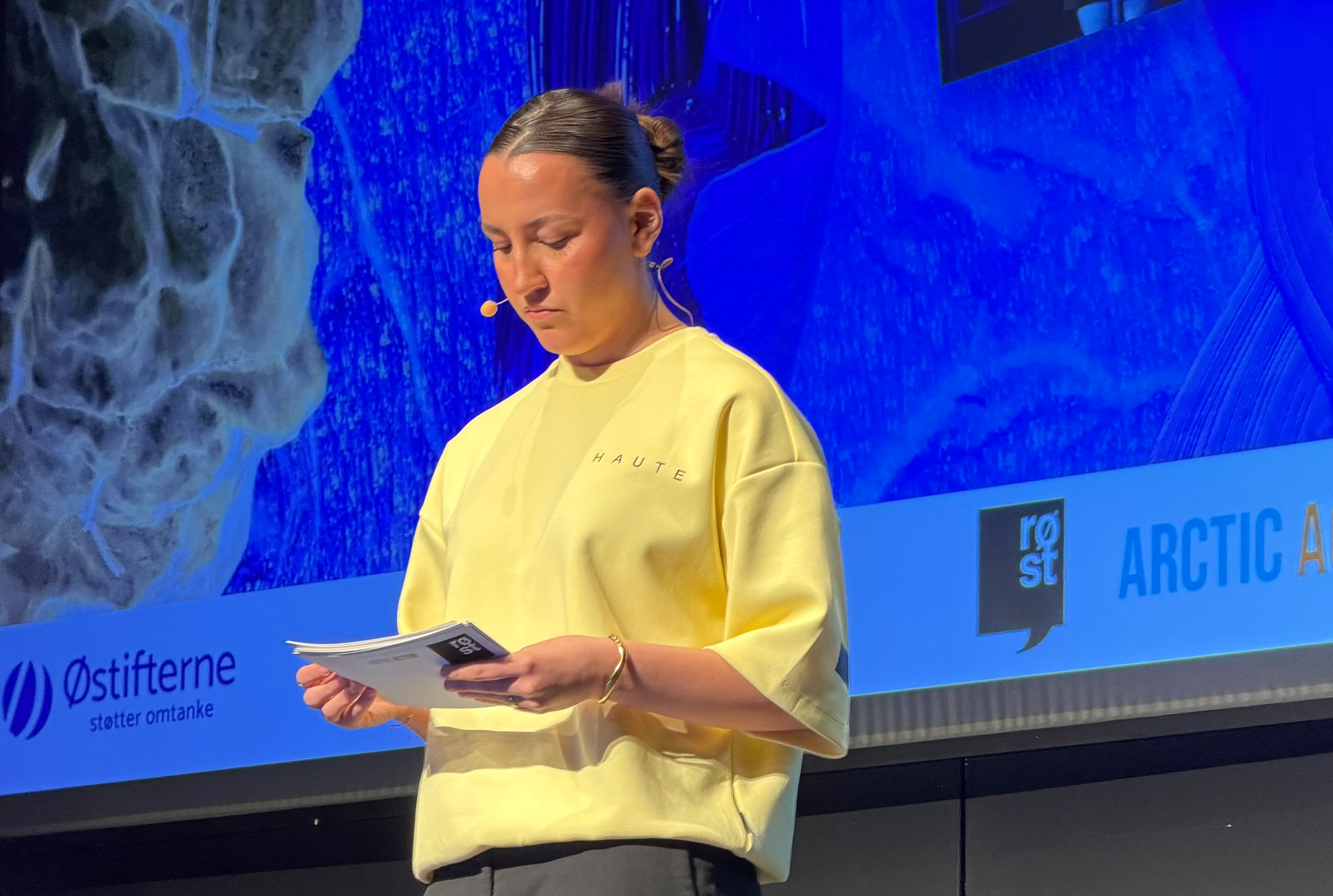
The speech was delivered by 18-year-old Veronica Geisler, who emphasized that the speech is important because many young people share the same experiences and thoughts.
The speech candidly described the experience of moving to Denmark and feeling different.
“I began to feel ashamed of being Greenlandic,” she said in her speech, describing how she struggled for years with questions of identity and belonging.
She explained that she grew up with Danish humor and often felt more Danish than her friends and family in Greenland—even though, when she was in Denmark, she felt more Greenlandic.
Prejudices about Greenland still persist
In her speech, Aviaja pointed out that many Greenlanders continue to encounter stereotypes and questions about their homeland.
Questions like, “Do you get ‘Greenland stiff’?” or “Do you live in igloos?” are things she’s heard many times herself.
According to Aviaja, coming face-to-face with a lack of knowledge about Greenland can be overwhelming, especially when you are a young person trying to find your place and your identity.
At the same time, she emphasized that this is precisely why it is important to stay true to one’s roots.
“I am proud to be Greenlandic,” he declared clearly from the podium.
Trump’s remarks sparked strong reactions
Aviaja also touched on the international attention surrounding Greenland and referred to U.S. President Donald Trump’s repeated statements about his desire to purchase Greenland.
She questioned how Greenlandic citizens perceive such statements.
“Trump wants to buy a country. Our country. What about us? Us, the people who live here?” she asked in her speech.
To her, the idea seemed both surreal and condescending—as if a country and its people could be turned into a commodity.
The message was met with a standing ovation
Despite the challenges and external pressures faced by many Greenlanders, Aviaja’s main message was a call for unity.
She urged Greenlanders not to let shame or prejudice define them, but instead to find strength in their community.
“Together we are stronger,” she said, highlighting the special warmth and sense of community that many people experience in Greenlandic communities.
When the speech ended, Aviaja was met with a standing ovation from the audience—a reaction that underscored just how deeply her words had moved the audience.
Aviaja concluded her speech with a clear message about identity and pride: “I am proud to be Greenlandic.”