Greenland and the EU have concluded their annual negotiations on fishing opportunities for 2027 in Brussels. The agreement is expected to generate total revenue of DKK 144.0 million, reduce the EU’s East Greenland shrimp quota by 950 tonnes and allocate no capelin quota to the EU in 2027.
Fishing is the backbone of Greenlandic society and is of great importance to jobs both at sea and on land, to supplies and to the overall economy. Each year, negotiations with the EU determine which quotas EU vessels may fish in Greenlandic waters and what financial returns this generates for Greenland.
On 20 November 2026, the Department of Fisheries, Hunting, Agriculture and Self-Sufficiency announced that the annual negotiations with the EU on fishing opportunities for 2027 had concluded. The negotiations were held at official level in Brussels from 16 to 18 November 2026 and are based on the Fisheries Protocol for 2025–2030, which forms part of the Fisheries Partnership Agreement between Greenland and the EU. Under the protocol, the EU is offered quotas in Greenlandic waters in exchange for financial compensation to Greenland.
The Fisheries Partnership Agreement essentially consists of two parts: a commercially based fisheries agreement involving access payments for allocated fishing opportunities and licence fees, and a sector support programme. For 2027, Greenland’s total revenue from the fisheries protocol with the EU is expected to amount to DKK 144.0 million. Of this, payments for fishing opportunities are expected to be approximately DKK 92.8 million, while licence payments are expected to be approximately DKK 27.3 million. At the same time, the department states that lower payments from the EU will be offset by increased resource taxes and other taxes from Greenland’s fishing industry.
One of the most noticeable changes in the 2027 agreement concerns deep-sea shrimp in East Greenland. Due to a reduction in scientific advice, the EU’s fishing opportunities for shrimp in East Greenland have been reduced by 950 tonnes, from the indicative quantity of 4,150 tonnes in the protocol to 3,200 tonnes in 2027. This is intended to provide Greenlandic vessels with a larger quota allocation and better opportunities to utilise their capacity, which, according to the department, will also contribute to increased public revenue from resource taxes and other taxes.
The EU will not be offered any capelin quota in East Greenland in 2027, even though the indicative quantity in the protocol is 13,000 tonnes. This is because a minimum quota of 30,000 tonnes of capelin has been reserved for Greenland. The protocol also stipulates that if additional quota is available beyond Greenland’s minimum quota, the EU may be offered up to 7.7 percent of the applicable total allowable catch (TAC).
For a number of other species, the quantities will remain at the indicative levels set out in the protocol for 2027. These include cod in East Greenland at 2,050 tonnes, demersal redfish in East Greenland at 2,100 tonnes, Greenland halibut in West Greenland south of 68°N at 1,900 tonnes, Greenland halibut in East Greenland at 4,775 tonnes, deep-sea shrimp in West Greenland at 2,431 tonnes, roundnose grenadier at 100 tonnes in East Greenland and 100 tonnes in West Greenland, and bycatch in Greenland at 300 tonnes. Both pelagic redfish in East Greenland and NAFO 1F, as well as mackerel in East Greenland, are set at zero tonnes.
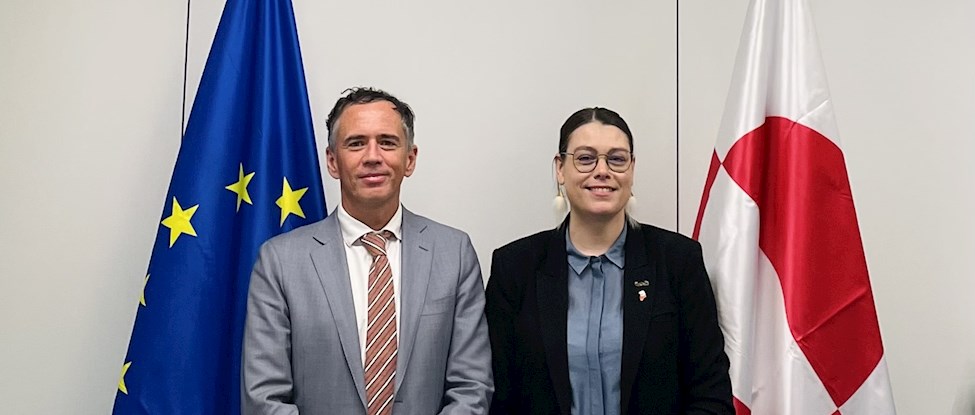
The negotiations involved a broad Greenlandic delegation with representatives from the Department of Fisheries, Hunting, Agriculture and Self-Sufficiency, Greenland’s Mission to the EU, the Greenland Fisheries Licence Control Authority, the Greenland Institute of Natural Resources, the Department of Finance and Greenland’s fishing industry. With the agreement in place, both the authorities and the industry have a clear starting point for fishing activities in Greenlandic waters in 2027.